Graphical Maturity Profile
The graphical maturity profile visualizes the structural maturity of the CARE-IT foundational principles (P1–P8) and, optionally, the domains (D1–D6).
It is not a score.
It is not an overall rating.
It is not a certification representation.
It makes structural tensions, inconsistencies, and development areas visible.
Principle Profile (P1–P8)
Example Visualization
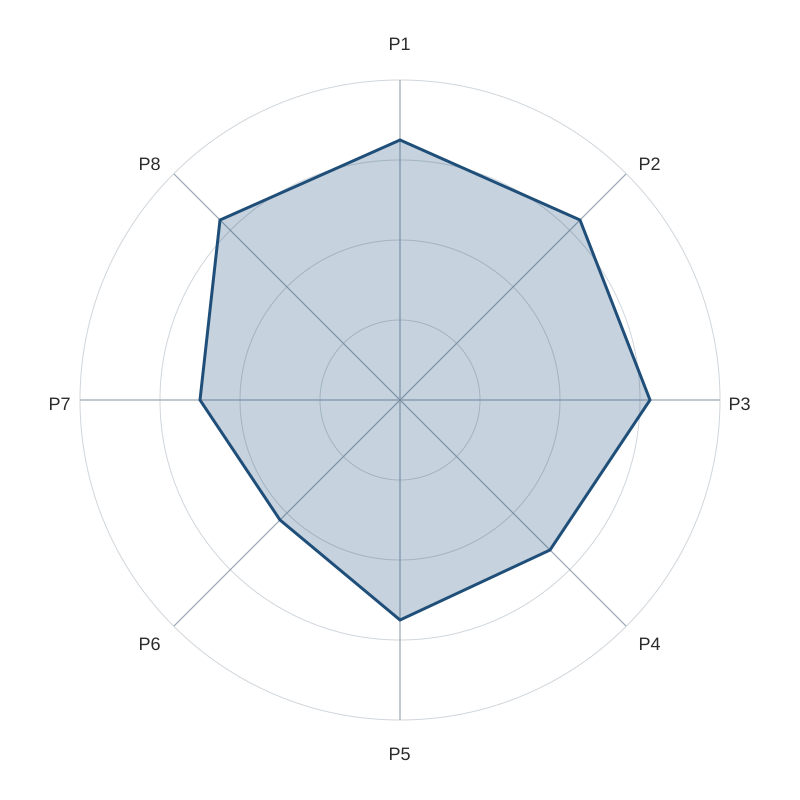
The principle profile shows how stable the normative foundation of the organization is.
A balanced profile does not imply equal distribution,
but structural coherence.
Low maturity in safety-critical principles
(for example P5 – Patient Safety)
limits the interpretation of the overall profile.
Interpretation of the Principle Profile
A maturity profile makes visible:
- where structural stability exists,
- where responsibility remains implicit,
- where innovation capability is not safeguarded,
- where information integrity may be at risk,
- where risk decisions lack clarity.
The profile supports prioritization —
not classification as “good” or “bad.”
Domain Profile (D1–D6)
In addition to principles, maturity can be visualized at the domain level.
The domains (D1–D6) represent organizational action spaces
in which the principles manifest concretely.
A domain profile illustrates:
- structural transparency,
- governance capability,
- organizational consistency,
- operational stability.
A strong principle profile combined with weak domain maturity
indicates implementation gaps.
A strong domain profile combined with weak principle maturity
may indicate formal structure without normative clarity.
Current / Target Profile
Example Comparison
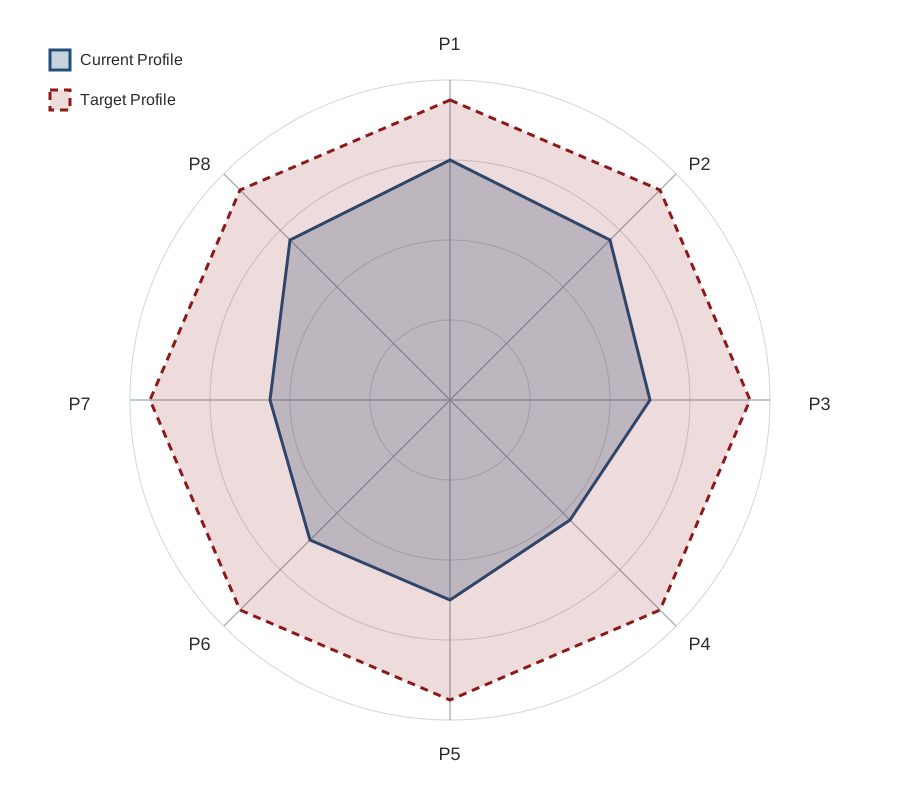
Comparing current and target profiles supports:
- strategic prioritization,
- structured roadmap planning,
- conscious resource allocation,
- governance focus.
Important:
The target profile is not an idealized maximum state.
It represents a realistically intended maturity level
within the context of clinical mandate, risk exposure, and available resources.
Heterogeneous Maturity Is Normal
Different maturity levels across principles or domains
are not errors, but reflections of organizational reality.
Example:
- High lifecycle sustainability (P6)
- Low innovation capability (P8)
- Medium information integrity (P7)
The goal is not equalization,
but conscious governance aligned with clinical effectiveness
and patient safety.
Workshop Application
The maturity profile is typically:
- developed per clinical system constellation,
- discussed interdisciplinarily,
- documented with brief justification,
- reviewed periodically.
Recommended sequence:
- Develop the principle profile
- Complement with domain profile (if meaningful)
- Identify structural tensions
- Derive prioritized development measures
Methodological Notes
- No point aggregation
- No averages
- No ranking between clinical system constellations
- No certification statements
The quality of reasoning matters more than the size of the visualized area.
Maturity describes structural robustness —
not performance.